How We Serve
Service Coordination Model
Throughout the year, we address the needs of individuals and families who live in multifamily housing communities.
Resident Engagement in Services
Our work is rooted in ongoing relationships with residents. Service Coordinators walk alongside individuals and families throughout the year, building trust, recognizing strengths, and engaging people in services that support their goals.
The Service Coordination Model graphic illustrates how this work comes together: the central role of the Service Coordinator, the diverse populations they support within a community, and the three interconnected areas of work that drive our mission and vision. The model also highlights the outcomes we work toward and the case management process— from referral through follow-up—embedded across all areas of service.
Tools of Engagement
- Service Coordination
- Blended Management
- Referral and Linkage
- Community Resource Guides
- Needs Assessment
- Active Outreach
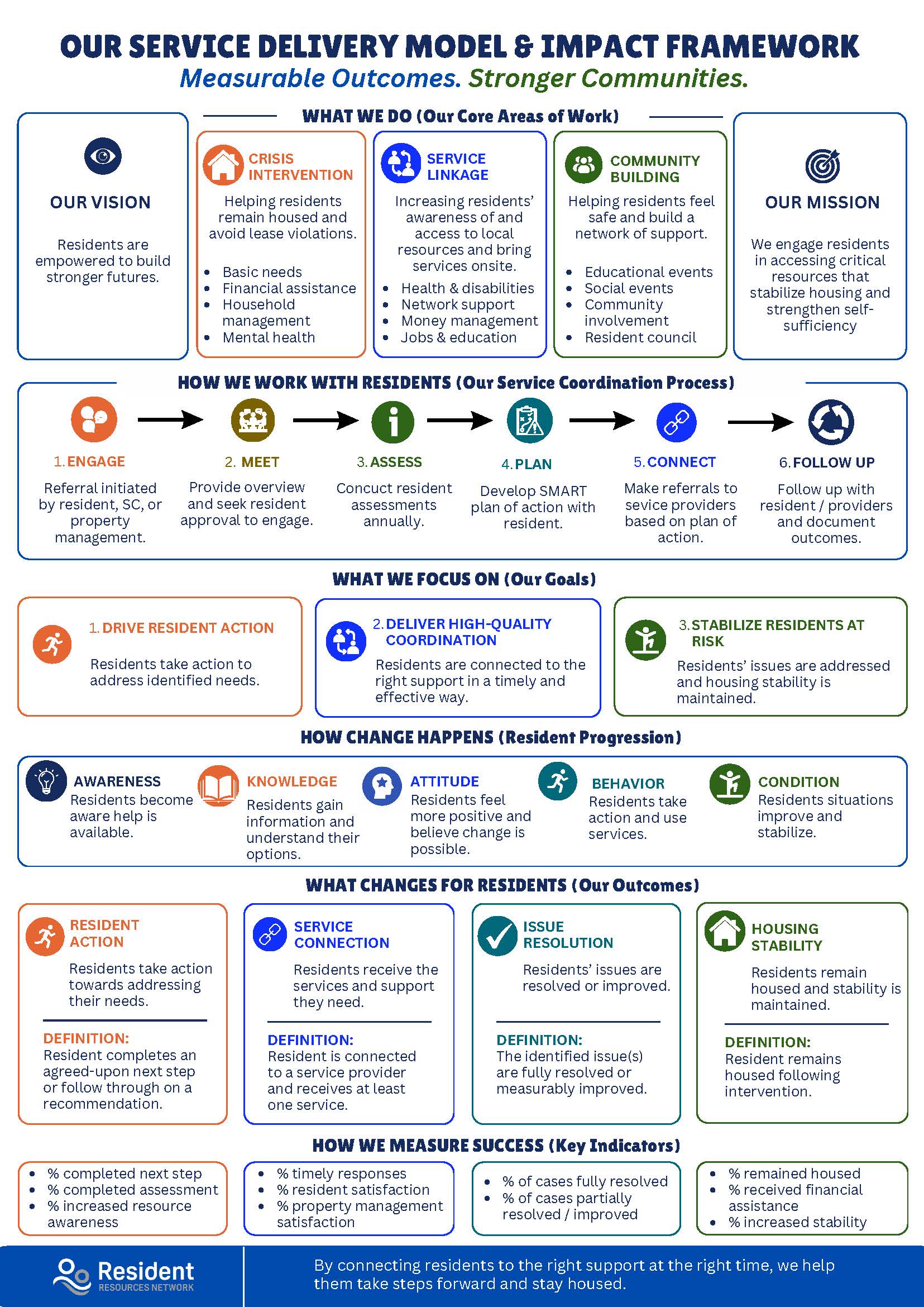
Click here to view an enlarged version of our model.
How We Show Up Matters.
RRN offers three different modes of service coordination–onsite, remote, and hybrid. Each mode is designed to ensure residents receive consistent, meaningful, and responsive support while enabling our Service Coordinators to develop and sustain strong relationships and establish a meaningful presence in the community.
Onsite
Onsite
Remote
Remote
Hybrid
Hybrid
Regardless of the service coordination mode in place, RRN is intently focused on responding to the needs of each community and its residents. Our Service Coordinators deliver ongoing support through engagement, connection, follow-up and service navigation.
Our Service Coordination Program
The Service Coordination program is the main vehicle by which RRN meets the needs of the residents we serve. The program aims to connect residents of multifamily communities to supportive services that promote self-sufficiency and improve quality of life. Services are coordinated through Service Coordinators, who are onsite to provide residents with information, make referrals to local community organizations, and bring resources to the community
What a Service Coordinator Does
Assessment
Assessment
Referral and Linkage
Referral and Linkage
Advocacy
Advocacy
Reporting
Reporting
Relationship Building
Relationship Building
Community Partnerships
Community Partnerships
Anticipated Outcomes
By engaging residents in the services they need the most, we anticipate meaningful changes that will impact their lives and the communities where they live.

Housing Stability
Safe and Supportive Communities