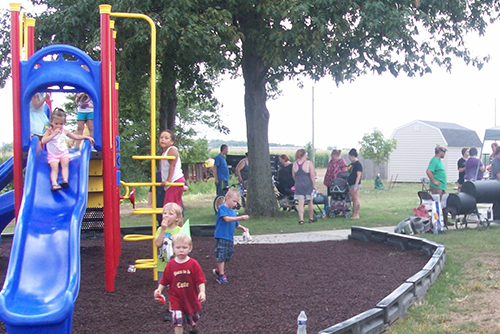
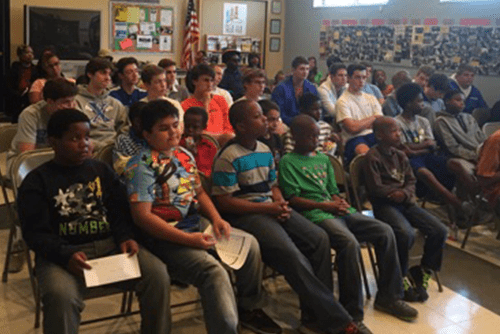
Throughout the year, we address the needs of individuals and families who live in multifamily housing communities.
Our work is rooted in ongoing relationships with residents. Service Coordinators walk alongside individuals and families throughout the year, building trust, recognizing strengths, and engaging people in services that support their goals.
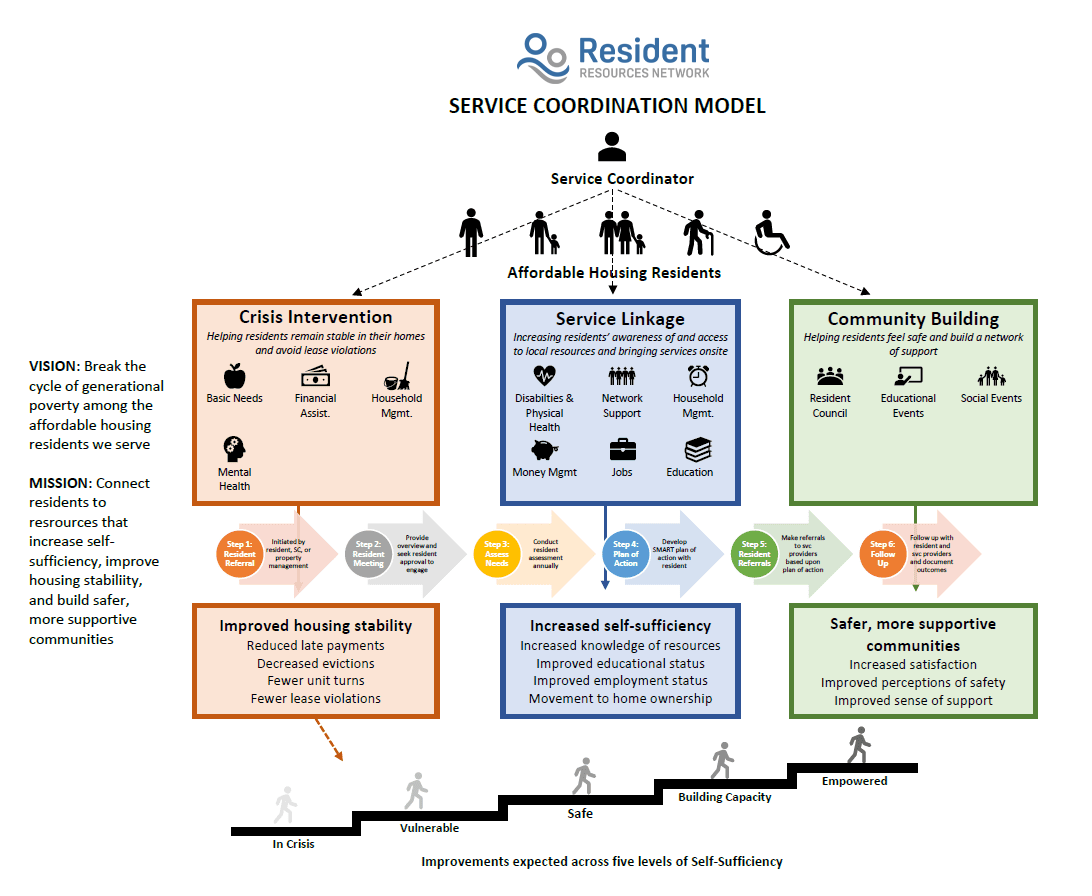
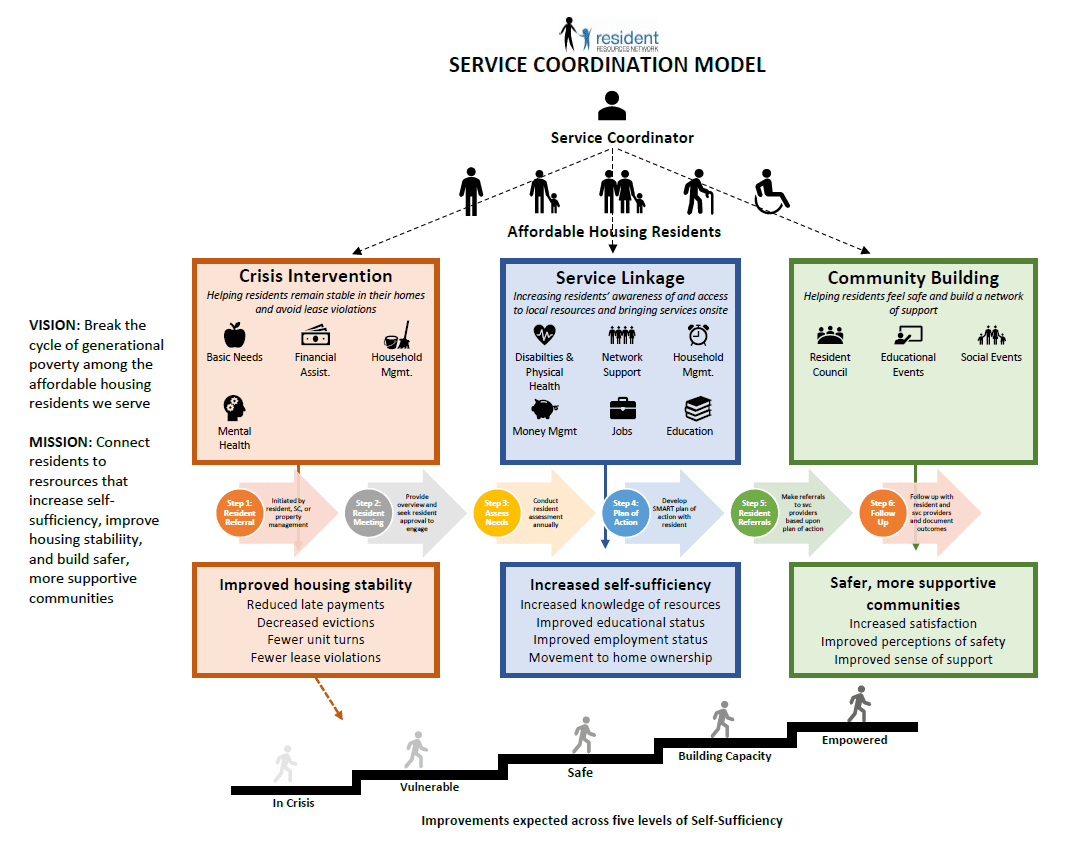
The Service Coordination Model graphic below illustrates how this work comes together: the central role of the Service Coordinator, the diverse populations they support within a community, and the three interconnected areas of work that drive our mission and vision. The model also highlights the outcomes we work toward and the case management process— from referral through follow-up—embedded across all areas of service.

RRN offers three different modes of service coordination–onsite, remote, and hybrid. Each mode is designed to ensure residents receive consistent, meaningful, and responsive support while enabling our Service Coordinators to develop and sustain strong relationships and establish a meaningful presence in the community.
Onsite Service Coordinators are embedded within the community, providing in-person support, building trusted relationships, and responding quickly to resident needs. This service mode allows for strong visibility, deep connection, and hands-on engagement with individuals and families.
Remote Service Coordinators provide ongoing support through phone, video, and digital tools, expanding access and reducing barriers to connection. This service mode allows residents to engage consistently with services in ways that fit their needs and schedules.
Hybrid Service Coordination combines remote support with a light onsite presence. Coordinators build relationships through periodic in-person engagement while providing ongoing connection, follow-up, and service navigation through remote channels.
Regardless of the service coordination mode in place, RRN is intently focused on responding to the needs of each community and its residents. Our Service Coordinators deliver ongoing support through engagement, connection, follow-up and service navigation.
By engaging residents in the services they need the most, we anticipate meaningful changes that will impact their lives and the communities where they live.